
In today's interconnected digital landscape, cybersecurity is no longer an option but a necessity. Every click, every download, and every online interaction carries a potential risk. This is where firewalls step in as the unsung heroes, guarding our digital perimeters. Among the various players in this crucial field, Fortinet stands out as a dominant force, offering robust and comprehensive security solutions.
This beginner's guide will demystify the Fortinet firewall, explaining its core functions, market presence, and why investing in Fortinet training can be a game-changer for your career.
What is Fortinet Firewall?
At its heart, a Fortinet firewall is a network security device that monitors and filters incoming and outgoing network traffic based on an organization's previously established security policies. Think of it as a vigilant gatekeeper for your network, deciding which traffic is allowed to pass through and which is blocked.
Fortinet's flagship firewall product line, FortiGate, is renowned for its Next-Generation Firewall (NGFW) capabilities. This means it goes beyond traditional packet filtering, offering advanced features such as:
- Intrusion Prevention System (IPS): Actively identifies and blocks malicious activities and unauthorized access attempts.
- Application Control: Allows administrators to define policies based on specific applications, rather than just ports and protocols.
- Web Filtering: Protects users from accessing malicious or inappropriate websites.
- VPN (Virtual Private Network): Enables secure, encrypted connections over public networks.
- Anti-Malware and Antivirus: Scans for and removes viruses, spyware, and other malicious software.
- Threat Intelligence: Utilizes real-time threat intelligence from FortiGuard Labs to detect and block emerging threats.
These features, combined within a single, integrated platform, provide a comprehensive security fabric that simplifies management and enhances protection against a constantly evolving threat landscape.
Market Share of Fortinet Firewall
Fortinet has consistently demonstrated strong leadership in the cybersecurity market, particularly in the firewall segment. Their commitment to innovation and their extensive product portfolio have earned them a significant market share globally. This presence is evident in various analyst reports and industry rankings, often placing them among the top leaders in NGFW and unified threat management (UTM) solutions.
Here's a graphical representation of Fortinet's impressive standing in the firewall market:
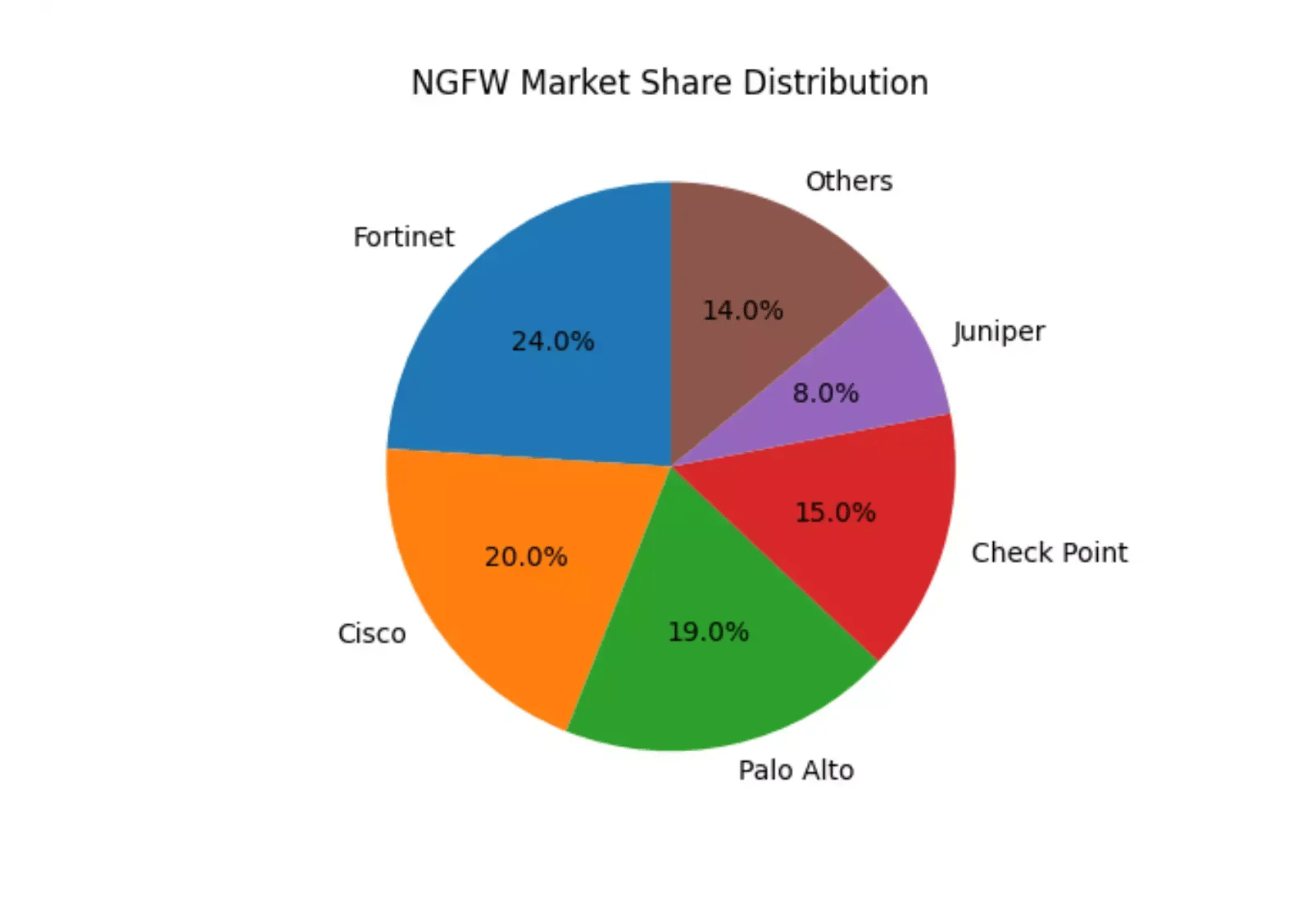
(Note: The exact percentages can fluctuate based on different market research firms and reporting periods. This graph provides a general illustration of Fortinet's strong market position.)
This significant market share underscores the trust and reliance businesses place on Fortinet's security solutions.
Why Take Fortinet Firewall Training?
With Fortinet's widespread adoption, the demand for skilled professionals who can deploy, configure, and manage Fortinet firewalls is consistently high. Here are compelling reasons to consider Fortinet firewall training:
- High Demand for Skills: As more organizations implement Fortinet solutions, the need for certified professionals grows.
- Enhanced Career Prospects: Fortinet certifications are highly recognized and respected in the industry, opening doors to diverse and lucrative career opportunities.
- Deep Understanding of Network Security: Training provides a comprehensive understanding of network security principles, threat mitigation strategies, and best practices.
- Practical, Hands-on Experience: Fortinet training often includes practical labs, allowing you to gain real-world experience with FortiGate devices.
- Stay Ahead of Threats: Learn how to configure and optimize Fortinet firewalls to defend against the latest cyber threats.
- Validation of Expertise: Certification validates your skills and knowledge, making you a more attractive candidate to employers.
Who Can Do Fortinet Firewall Training?
Fortinet firewall training is beneficial for a wide range of IT and security professionals, including:
- Network Administrators: Those responsible for maintaining network infrastructure and ensuring its security.
- Security Analysts: Professionals who monitor security systems, analyze threats, and respond to incidents.
- System Administrators: Individuals managing server environments and ensuring system integrity.
- IT Managers: Leaders who oversee IT operations and make strategic decisions about cybersecurity investments.
- Cybersecurity Professionals: Anyone looking to specialize in network security or enhance their existing cybersecurity skillset.
- Entry-Level IT Professionals: Individuals new to the IT field who want to build a strong foundation in network security.
Course Outcome
Upon successful completion of Fortinet firewall training and certification, you can expect to:
- Understand FortiGate fundamentals: Grasp the core concepts of FortiGate configuration, operation, and management.
- Master firewall policies: Learn to create and manage security policies to control network traffic effectively.
- Implement advanced security features: Configure and utilize features like IPS, application control, web filtering, and VPN.
- Troubleshoot common issues: Develop the skills to diagnose and resolve FortiGate-related problems.
- Optimize FortiGate performance: Learn best practices for maximizing the efficiency and security of FortiGate devices.
- Prepare for Fortinet certifications: Gain the knowledge and confidence to pass official Fortinet certification exams.
Career Opportunities in Fortinet Firewall
Fortinet-certified professionals are highly sought after in various roles across different industries. Some common career paths include:
- Network Security Engineer: Design, implement, and maintain network security infrastructure using Fortinet solutions.
- FortiGate Administrator: Manage and monitor FortiGate firewalls, ensuring optimal performance and security.
- Security Consultant: Provide expert advice and solutions to organizations on their cybersecurity strategies, often involving Fortinet products.
- SOC Analyst (Security Operations Center): Monitor security events, analyze alerts, and respond to incidents within a Fortinet environment.
- Cybersecurity Architect: Design and develop comprehensive security architectures that integrate Fortinet technologies.
- Technical Support Engineer: Provide technical assistance and troubleshooting for Fortinet products.
Salary Package
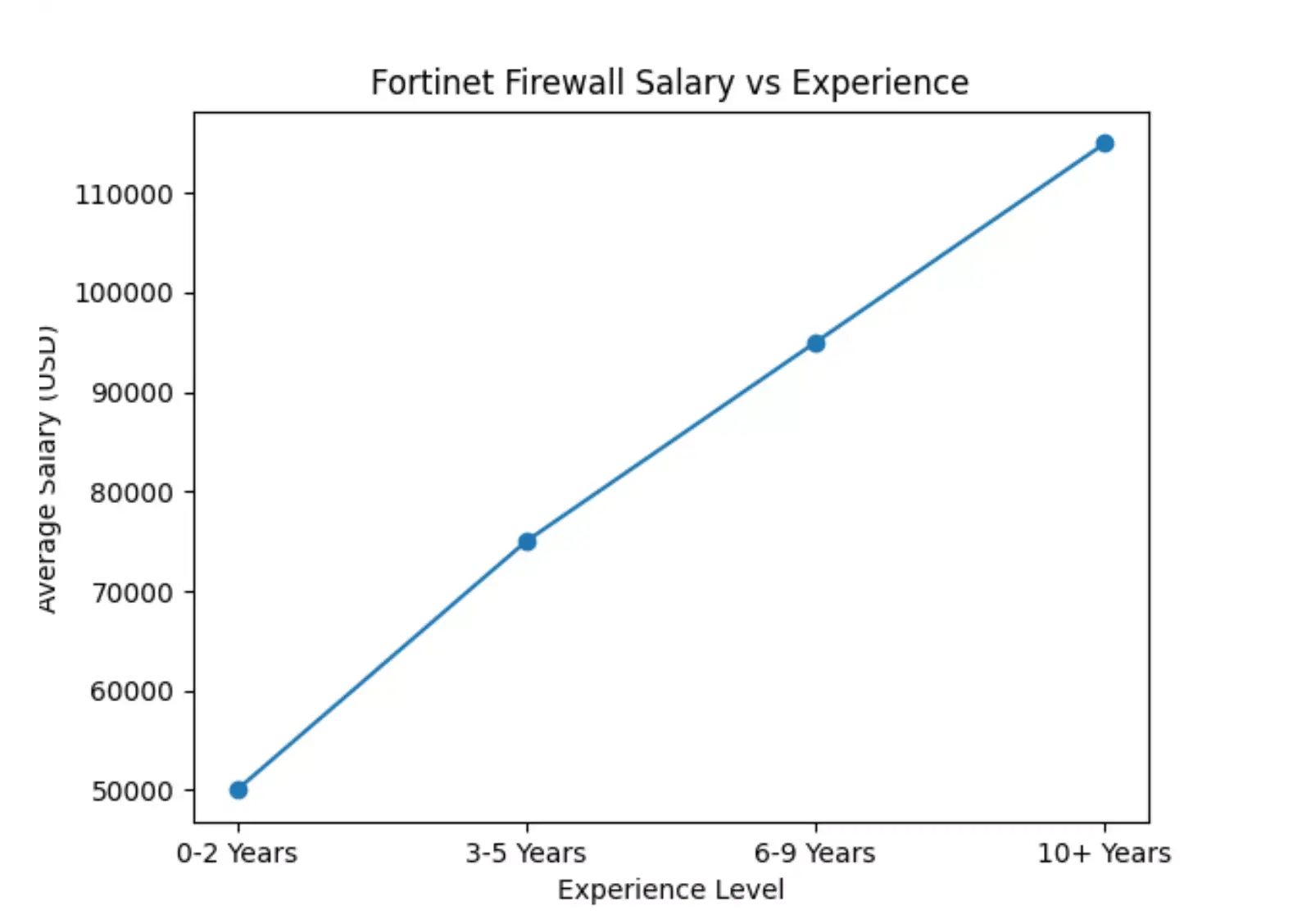
The salary for Fortinet firewall professionals can vary significantly based on experience, location, specific role, and certifications. However, generally, possessing Fortinet skills can lead to highly competitive compensation packages.
Here's an illustrative graph showing the potential salary progression for Fortinet Firewall professionals based on experience:
Companies Hiring Fortinet Firewall Professionals
As Fortinet continues to lead the Gartner Magic Quadrant for Network Firewalls and SASE, its technology is a staple in the infrastructure of global giants. Major players across telecommunications, finance, and managed services are constantly on the lookout for certified experts.
Key sectors and companies hiring include:
- Managed Security Service Providers (MSSPs): IBM Security, Wipro, HCLTech, and NTT Data.
- Telecommunications: AT&T, Verizon, and T-Mobile (who rely on FortiGate for massive data throughput).
- Cloud & Tech Infrastructure: Amazon Web Services (AWS), Microsoft Azure, and UST.
- Global Consulting: Deloitte, PwC, and SAIC (frequently hiring for government/defense contracts).
- Finance & Healthcare: Major banks and hospital networks that require high-compliance security (PCI-DSS/HIPAA).
Roles and Responsibilities
A Fortinet professional’s day-to-day is about more than just "blocking traffic." It involves strategic management of the Fortinet Security Fabric.
- FortiGate Configuration: Designing and deploying firewall policies, NAT rules, and SD-WAN configurations.
- Incident Response: Monitoring logs via FortiAnalyzer to detect and neutralize real-time threats.
- Secure Access: Managing SSL and IPsec VPNs for remote workforces.
- System Health: Performing firmware upgrades, patch management, and security hardening.
- Compliance & Auditing: Generating security reports to prove adherence to industry standards like ISO 27001.
Steps to Prepare for Fortinet Firewall Certification
In late 2025, Fortinet revamped its certification program to reintroduce the NSE 1-8 levels alongside new designations. Here is your roadmap to becoming a certified expert in 2026:
- Start with the Fundamentals (FCF & FCA): If you are new, take the Fortinet Certified Fundamentals and Associate courses to learn the basics of the threat landscape.
- Aim for Professional Status (FCP): This is the "sweet spot" for most jobs. To earn the FCP in Secure Networking, you typically need to pass the NSE 4 (FortiOS Administrator) exam plus one elective (like NSE 5 FortiManager).
- Utilize the Training Institute: Fortinet offers free self-paced e-learning for many modules. Leverage these before paying for instructor-led boot camps.
- Hands-on Lab Practice: You cannot pass based on theory alone. Use FortiGate-VM or physical lab gear to practice CLI commands and GUI configurations.
- Practice Exams: Use official practice questions to get used to the "multiple choice and drag-and-drop" format used by Pearson VUE.
Conclusion
The Fortinet Firewall is more than just a security tool; it is a gateway to a high-paying, future-proof career in cybersecurity. With its massive market share and constant innovation in AI-driven security, Fortinet skills are among the most valuable assets a network professional can possess today.
Whether you are a student looking for your first break or a veteran admin looking to upskill, the path is clear: learn the Fabric, get certified, and secure the future.

Your First Step into DevOps for AEM: A Beginner’s Roadmap

Beginner’s Roadmap to Certified AI for Finance Professionals

No Comments Yet
Let us know what you think