
In the fast-paced world of software development, ensuring the quality and reliability of applications is paramount. This is where automation testing comes into play, and among the myriad of tools available, Java with Selenium stands out as a powerful and widely adopted combination. If you're looking to dive into the exciting realm of automation testing, this beginner's guide will walk you through everything you need to know about Java Selenium.
What is Java with Selenium?
At its core, Selenium is an open-source suite of tools designed for automating web browsers. It provides a robust framework for testers to write automated tests for web applications across different browsers and operating systems. Selenium isn't a single tool but rather a collection of tools, each with a specific purpose:
- Selenium IDE (Integrated Development Environment): A Firefox/Chrome extension for record-and-playback of interactions with the browser.
- Selenium WebDriver: The heart of Selenium, it allows you to programmatically control a browser using various programming languages.
- Selenium Grid: Used for running multiple tests across different machines and browsers simultaneously, significantly speeding up test execution.
Now, where does Java fit into this picture? Java is one of the most popular and robust programming languages in the world. When you combine Java with Selenium WebDriver, you leverage Java's powerful object-oriented capabilities, extensive libraries, and strong community support to write sophisticated and maintainable automation scripts. Java acts as the programming language that drives the Selenium WebDriver API, allowing you to interact with web elements, navigate pages, and assert expected behaviors.
This combination empowers testers to create comprehensive and scalable automation frameworks for complex web applications.
Market Share of Java with Selenium
The popularity of Java with Selenium is not just anecdotal; it's backed by significant market adoption. While specific, constantly updated market share percentages can fluctuate, several indicators consistently show Java as a leading language for Selenium automation.
Factors contributing to its strong market share include:
- Enterprise Adoption: Java is a dominant language in enterprise-level applications, making it a natural choice for automating tests within these environments.
- Mature Ecosystem: Java boasts a mature ecosystem with a plethora of libraries, frameworks (like TestNG and JUnit), and IDEs (like IntelliJ IDEA and Eclipse) that integrate seamlessly with Selenium.
- Community Support: A massive global community means abundant resources, forums, and tutorials are available for learners and practitioners.
Here's a conceptual graph illustrating the widespread use of Java in the automation testing landscape, often alongside other popular languages.
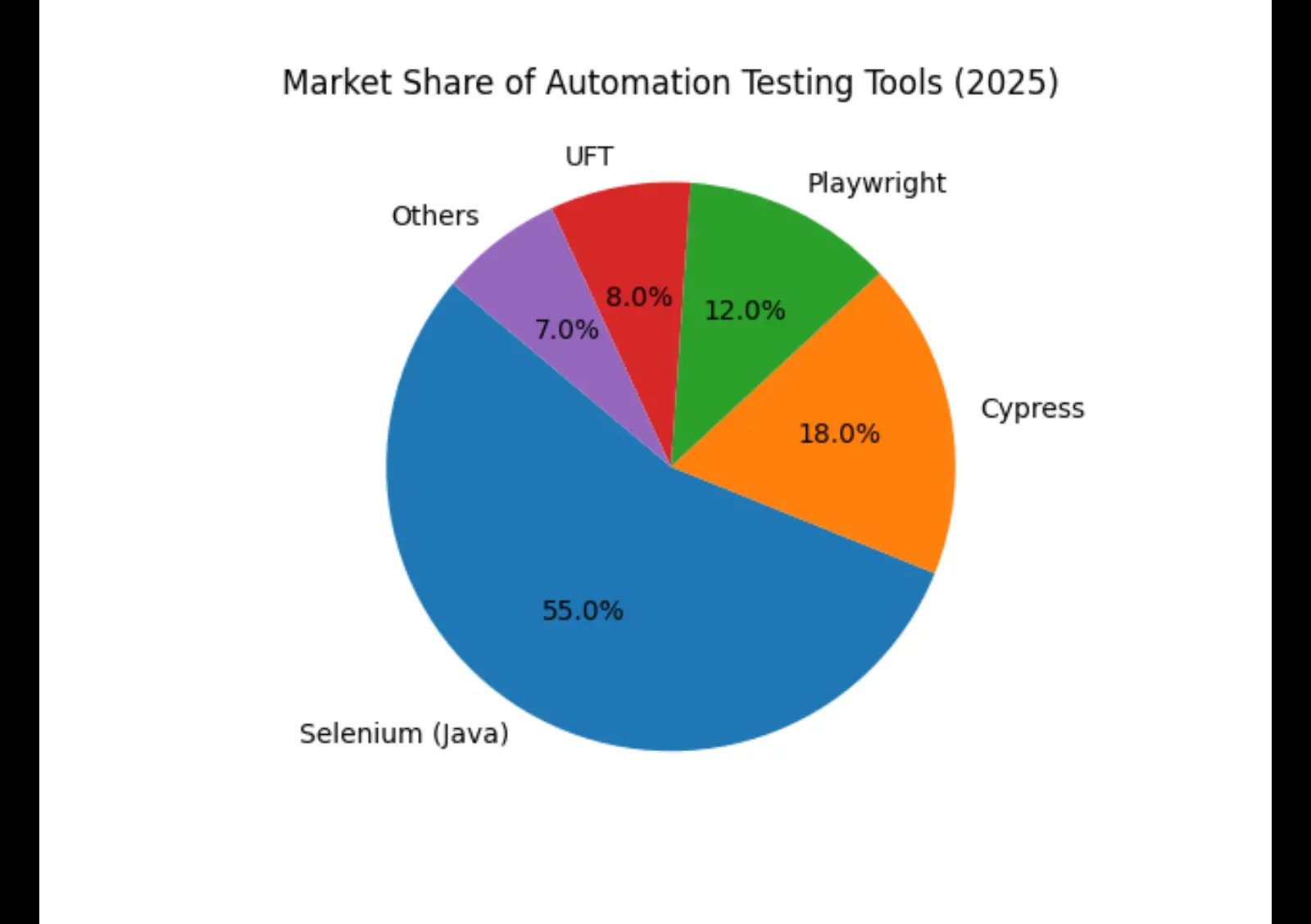
(Note: This graph is illustrative. Actual market share numbers can vary based on specific industry reports and surveys at any given time.)
Why Take Java with Selenium Training?
Investing in Java with Selenium training offers a multitude of benefits for both individuals and organizations:
- High Demand in the Job Market: The need for skilled automation testers proficient in Java and Selenium is consistently high across industries.
- Robust and Scalable Test Solutions: Learn to build powerful, maintainable, and scalable automation frameworks that can handle complex applications.
- Cross-Browser and Cross-Platform Testing: Gain the ability to test web applications across various browsers (Chrome, Firefox, Edge, Safari) and operating systems (Windows, macOS, Linux).
- Cost-Effectiveness: Selenium is open-source, meaning no licensing costs, making it a cost-effective solution for businesses.
- Enhanced Quality and Efficiency: Automation reduces human error, speeds up the testing process, and allows for more frequent and comprehensive testing, leading to higher quality software releases.
- Career Advancement: Mastering this combination opens doors to senior roles and specialist positions in quality assurance and development.

Who Can Do Java with Selenium Training?
Java with Selenium training is suitable for a diverse range of individuals, including:
- Manual Testers: Looking to transition into automation testing and enhance their skill set.
- Quality Assurance (QA) Engineers: Aiming to automate repetitive testing tasks and build robust test suites.
- Software Developers: Who want to understand testing methodologies and contribute to automation efforts.
- Recent Graduates/Freshers: Seeking a high-demand skill to kickstart their career in IT.
- Anyone Interested in Automation: With a basic understanding of programming concepts, especially object-oriented programming.
While prior programming experience is beneficial, a good training program will typically start with Java fundamentals, making it accessible to beginners as well.
Course Outcome
Upon successful completion of a comprehensive Java with Selenium training program, participants should be able to:
- Understand the core concepts of Java programming, including OOP, data types, control structures, and collections.
- Grasp the architecture and components of the Selenium suite (WebDriver, IDE, Grid).
- Write efficient and maintainable automation scripts using Java and Selenium WebDriver.
- Identify web elements using various locators (ID, Name, ClassName, XPath, CSS Selectors).
- Perform actions on web elements such as clicking, typing, selecting dropdowns, and handling alerts.
- Implement advanced Selenium concepts like explicit and implicit waits, handling frames, windows, and dynamic elements.
- Develop robust test frameworks using tools like TestNG or JUnit.
- Integrate with build automation tools like Maven or Gradle.
- Generate comprehensive test reports.
- Understand and apply best practices for writing clean, reusable, and scalable automation code.
Career Opportunities in Java with Selenium
Proficiency in Java with Selenium opens up a wide array of exciting career opportunities in the software industry:
- Automation Test Engineer/Lead: Design, develop, and maintain automated test scripts and frameworks.
- QA Engineer/Analyst: Focus on overall quality assurance, often incorporating automation into their daily tasks.
- SDET (Software Development Engineer in Test): A hybrid role requiring strong development and testing skills, often involved in building tools and frameworks.
- Test Architect: Design the overall testing strategy and architecture for large-scale projects, including automation frameworks.
- Performance Test Engineer: While not solely Selenium, knowledge of automation is often a prerequisite for performance testing tools.
- DevOps Engineer: Automation skills are crucial in DevOps for integrating testing into CI/CD pipelines.
These roles are found across various sectors, including IT services, e-commerce, banking, healthcare, telecommunications, and more.
Salary Package
The salary for Java with Selenium professionals can vary significantly based on location, company size, industry, and most importantly, experience and skill level. However, it's generally a well-paying field due to the high demand for these specialized skills.
Here’s a conceptual graph illustrating how salary typically increases with experience for a Java Selenium automation professional in the US market.
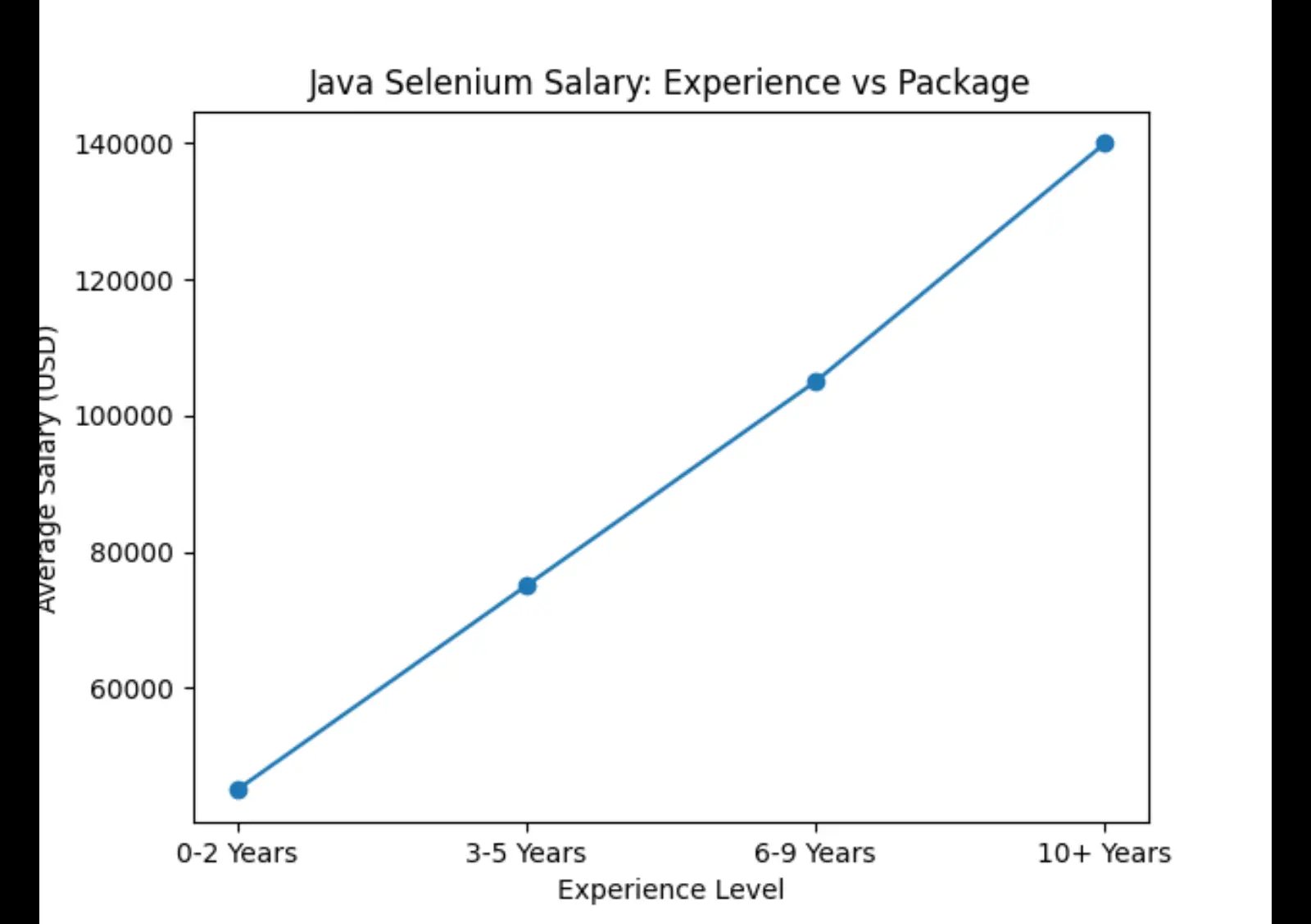
(Note: These figures are conceptual estimates and can vary based on real-time market data, specific company, location, and individual negotiation skills. They typically include base salary and may not account for bonuses, stock options, or other benefits.)
Companies Hiring Java with Selenium Professionals
Many leading technology companies and enterprises across various sectors actively seek Java with Selenium professionals. Some of the major players include:
- Tech Giants: Google, Amazon, Microsoft, Apple, Facebook (Meta)
- Consulting Firms: Accenture, Deloitte, Capgemini, TCS, Wipro, Infosys
- E-commerce: eBay, Shopify
- Financial Services: JPMorgan Chase, Bank of America, Fidelity, Capital One
- Healthcare: Various healthcare IT companies and providers
- Startups: Numerous growing startups across all industries constantly look for automation talent.
Essentially, any company with a significant web presence and a commitment to quality software development is a potential employer.
Roles and Responsibilities
A Java with Selenium automation professional typically undertakes a range of responsibilities, including:
- Analyzing Requirements: Understanding application functionalities and user stories to define test scope.
- Test Case Design: Creating detailed, effective, and reusable test cases.
- Framework Development: Designing, developing, and maintaining scalable automation frameworks using Java, Selenium WebDriver, TestNG/JUnit, and Maven/Gradle.
- Scripting: Writing, executing, and debugging automated test scripts for functional, regression, and cross-browser testing.
- Reporting: Generating and analyzing test execution reports, identifying defects, and communicating results to stakeholders.
- Maintenance: Regularly updating and maintaining existing automation scripts to accommodate application changes.
- Collaboration: Working closely with manual testers, developers, and business analysts to ensure comprehensive test coverage.
- CI/CD Integration: Integrating automated tests into continuous integration and continuous delivery pipelines (e.g., Jenkins, GitLab CI, GitHub Actions).
- Mentoring: For senior roles, mentoring junior automation engineers and providing technical guidance.
Steps to Prepare for Java with Selenium Certification
While formal certification in "Java with Selenium" isn't as universally standardized as, say, an Oracle Java certification, you can pursue certifications in Java and demonstrate your Selenium proficiency through projects. Here's a structured approach:
-
Master Java Fundamentals:
-
Start with core Java concepts: variables, data types, operators, control flow, loops.
-
Deep dive into Object-Oriented Programming (OOP) principles: encapsulation, inheritance, polymorphism, abstraction.
-
Learn about collections, exception handling, and file I/O.
-
Consider an Oracle Certified Associate (OCA) Java SE Programmer certification for a strong Java foundation.
-
-
Learn Selenium WebDriver:
-
Understand Selenium architecture and its components.
-
Learn how to set up the environment (Java, IDE, WebDriver, Browser Drivers).
-
Master various locator strategies (ID, Name, ClassName, XPath, CSS Selectors).
-
Practice common WebDriver commands (e.g.,
get(),findElement(),click(),sendKeys()). -
Handle advanced concepts: waits (implicit, explicit, fluent), alerts, frames, windows, dropdowns, actions API.
-
-
Explore Test Frameworks (TestNG/JUnit):
-
Learn to structure tests using annotations.
-
Understand test suites, groups, data providers, and assertions.
-
-
Integrate Build Tools (Maven/Gradle):
-
Learn how to manage dependencies and build projects.
-
-
Version Control (Git):
-
Essential for collaborative development and managing your automation code.
-
-
Practice, Practice, Practice:
-
Work on real-world projects or create your own automation framework from scratch.
-
Solve coding challenges related to web element interactions.
-
-
Explore Advanced Topics (Optional but Recommended):
-
Selenium Grid for parallel testing.
-
Page Object Model (POM) design pattern.
-
Behavior-Driven Development (BDD) with Cucumber.
-
Integration with CI/CD tools (Jenkins).
-
-
Showcase Your Skills:
-
Build a strong GitHub portfolio with your automation projects.
-
Contribute to open-source projects.
-
Prepare for technical interviews focusing on practical coding and framework design.
-
Conclusion
Java with Selenium is a formidable combination that empowers professionals to build robust, scalable, and efficient automation testing solutions for web applications. The demand for these skills continues to grow, offering promising career paths and attractive salary packages. By investing in comprehensive training and continuous learning, you can equip yourself with the tools and knowledge necessary to excel in the dynamic field of automation testing. Start your journey today and become a key player in delivering high-quality software to the world.

Getting Started with Oracle Eloqua: A Beginner’s Guide

Beginner’s Roadmap to Context Engineering in AI and LLMs

No Comments Yet
Let us know what you think