
To all aspiring data enthusiasts! If you've ever felt overwhelmed by the sheer volume of data in the world and wondered how to make sense of it all, you've come to the right place. Today, we're diving into the exciting world of Apache Spark – a powerful, open-source unified analytics engine for large-scale data processing. Whether you're a seasoned developer or a complete beginner, this guide will walk you through everything you need to know about Spark, from its core concepts to career opportunities.
What is Apache Spark?
Imagine you have a mountain of data – so vast that traditional databases and processing tools would crumble under its weight. This is where Apache Spark steps in. It's a lightning-fast cluster computing framework designed for big data processing, analytics, and machine learning.
At its heart, Spark provides an interface for programming entire clusters with implicit data parallelism and fault tolerance. It can handle various types of data processing, including:
- Batch Processing: Processing large datasets in batches, ideal for tasks like daily reports or ETL (Extract, Transform, Load) operations.
- Real-time Processing: Analyzing data as it arrives, crucial for applications like fraud detection or live dashboards.
- Graph Processing: Analyzing relationships between data points, useful for social networks or recommendation engines.
- Machine Learning: Building and training machine learning models on massive datasets with its integrated MLlib library.
Spark achieves its incredible speed by performing computations in memory, significantly reducing the need to read and write data to disk. It's also highly flexible, supporting multiple programming languages like Python, Scala, Java, and R.
Here's a simplified visual representation of Spark's architecture:
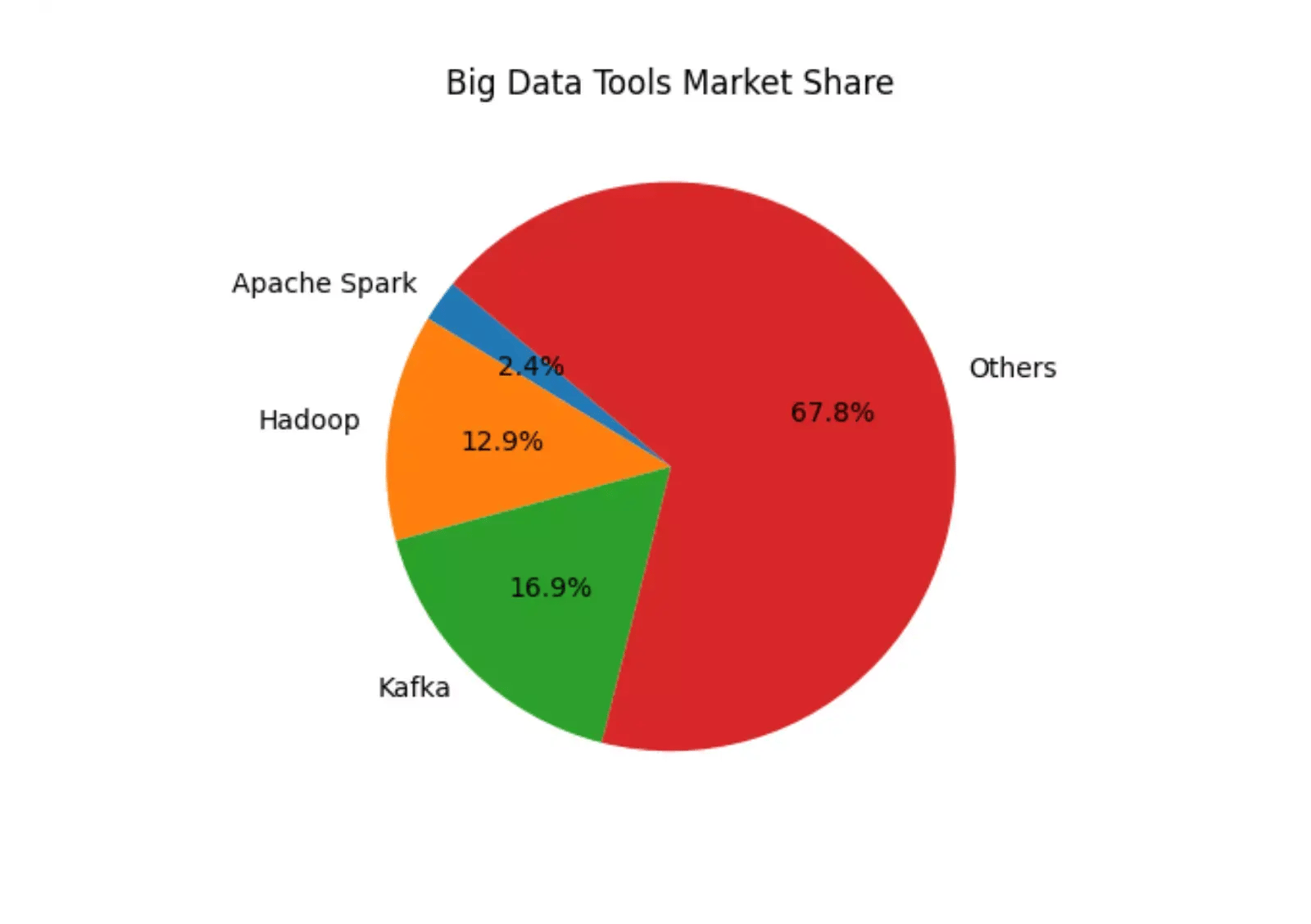
Market Share of Apache Spark
Apache Spark's adoption has grown in recent years, making it one of the most in-demand technologies in the big data ecosystem. Its versatility and performance have led to widespread use across various industries, from finance and healthcare to e-commerce and media.
Here's a look at Spark's impressive market share
 Why Take Apache Spark Training?
In a world increasingly driven by data, the ability to process, analyze, and derive insights from vast datasets is a critical skill. Apache Spark training offers a multitude of benefits:
- High Demand: Companies are desperately seeking professionals with Spark expertise to handle their big data needs.
- Career Advancement: Mastering Spark can unlock new career opportunities and accelerate your professional growth.
- Problem-Solving Skills: You'll learn to tackle real-world big data problems, from data ingestion and transformation to advanced analytics.
- Industry Recognition: Becoming proficient in Spark is a badge of honor in the data science and engineering community.
- Versatility: Spark's support for multiple programming languages means you can leverage your existing skills or learn new ones.

Who Can Do Apache Spark Training?
Apache Spark training is beneficial for a wide range of professionals, including:
- Data Engineers: To build robust and scalable data pipelines.
- Data Scientists: To perform advanced analytics and develop machine learning models on big data.
- Business Intelligence Professionals: To extract deeper insights from large datasets.
- Software Developers: To integrate Spark into their applications for big data processing.
- Big Data Architects: To design and implement scalable big data solutions.
- Anyone Interested in Big Data: If you have a passion for data and a desire to work with cutting-edge technology, Spark training is for you.
While some programming knowledge (especially in Python or Scala) and a basic understanding of data concepts are helpful, many beginner-friendly courses are designed to get you up to speed.
Course Outcome
Upon completing comprehensive Apache Spark training, you can expect to:
- Understand the core concepts of Apache Spark and its ecosystem.
- Be proficient in writing Spark applications using languages like Python (PySpark) or Scala.
- Know how to perform various data transformations and actions using Spark RDDs and DataFrames.
- Be able to work with different Spark components like Spark SQL, Spark Streaming, and MLlib.
- Understand how to deploy and manage Spark applications on various cluster managers.
- Gain practical experience through hands-on projects and case studies.
- Be well-prepared for Apache Spark certification exams.
Career Opportunities in Apache Spark
The demand for Apache Spark professionals is consistently high, leading to a wide array of exciting career paths. Here are some of the most prominent roles:
- Spark Developer/Engineer: Design, develop, and maintain Spark-based applications and data pipelines.
- Big Data Engineer: Build and manage large-scale data processing systems, often involving Spark, Hadoop, and other big data technologies.
- Data Scientist: Use Spark's machine learning capabilities to build predictive models and extract insights from vast datasets.
- Data Architect: Design the overall architecture for big data solutions, ensuring scalability and efficiency.
- Machine Learning Engineer: Focus on developing and deploying machine learning models at scale using Spark MLlib.
- BI Developer/Analyst (with Spark expertise): Leverage Spark to enhance business intelligence reporting and analysis.
Salary Package - Experience Vs Package in $
The strong demand for Spark skills translates into highly competitive salary packages. Salaries can vary based on experience, location, company size, and specific skill sets. However, generally, Apache Spark professionals command excellent compensation.
Here's a graphical representation illustrating the typical salary progression with increasing experience for Apache Spark professionals in the US (figures are approximate and can vary):
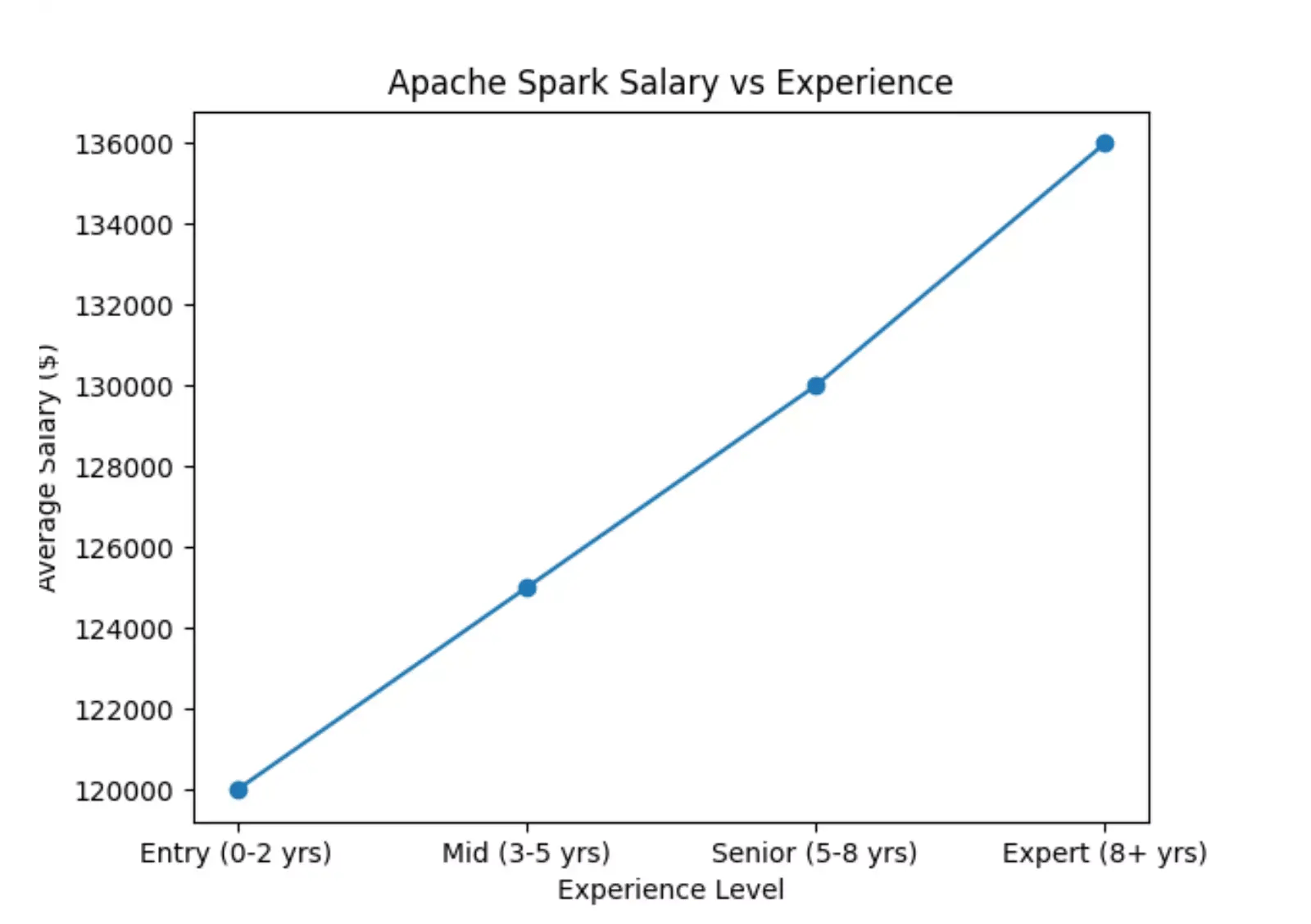
As you can see, with each year of experience, your earning potential as an Apache Spark professional grows significantly.
Companies Hiring Apache Spark Professionals
Many leading tech companies and data-driven organizations are actively seeking Apache Spark talent. Here's a glimpse of some of the top employers:
- Amazon (AWS)
- Microsoft (Azure)
- Google (Google Cloud)
- Netflix
- Uber
- Airbnb
- IBM
- Intel
- Morgan Stanley
- Accenture
- Capgemini
- Deloitte
- Walmart
- Target
- And many more startups and enterprises across various sectors!
Roles and Responsibilities
While the specific responsibilities can vary based on the role, here are some common duties of an Apache Spark professional:
- Designing and Developing Spark Applications: Writing efficient and scalable Spark code in Scala, Python (PySpark), or Java.
- Building Data Pipelines: Creating ETL processes to ingest, transform, and load data from various sources into Spark for processing.
- Optimizing Spark Performance: Tuning Spark configurations, code, and data structures to ensure optimal performance for large datasets.
- Working with Spark Ecosystem Components: Utilizing Spark SQL for structured data, Spark Streaming for real-time data, and MLlib for machine learning.
- Troubleshooting and Debugging: Identifying and resolving issues in Spark applications and clusters.
- Data Modeling: Designing appropriate data models for efficient processing and storage in Spark.
- Collaboration: Working with data scientists, analysts, and other engineers to understand requirements and deliver solutions.
- Monitoring and Maintenance: Ensuring the smooth operation and health of Spark clusters and applications.
Steps to Prepare for Apache Spark Certification
Obtaining an Apache Spark certification can validate your skills and boost your career prospects. Here's a step-by-step guide to prepare:
- Master the Fundamentals: Thoroughly understand Spark's architecture, RDDs, DataFrames, and the various APIs.
- Choose Your Language: Decide whether you'll certify in Scala or Python (PySpark) and become proficient in that language.
- Hands-on Practice: The key to success is extensive practical experience. Work on numerous projects, solve coding challenges, and experiment with different Spark functionalities.
- Explore the Spark Ecosystem: Gain familiarity with Spark SQL, Spark Streaming, and MLlib.
- Review Documentation: The official Apache Spark documentation is an invaluable resource.
- Take a Reputable Training Course: Enroll in a structured course that covers the certification syllabus and provides hands-on labs.
- Solve Practice Tests: Work through sample questions and mock exams to familiarize yourself with the certification format and identify areas for improvement.
- Understand Cluster Management: Have a basic understanding of how Spark interacts with cluster managers like YARN or Mesos.
- Performance Tuning Knowledge: Be aware of common performance bottlenecks and optimization techniques in Spark.
Conclusion
Apache Spark has undoubtedly revolutionized the way we approach big data processing and analytics. Its speed, versatility, and comprehensive ecosystem make it an indispensable tool for anyone working with large datasets. By investing in Apache Spark training and certification, you're not just learning a technology; you're opening doors to a future-proof career in the ever-evolving world of data.
So, are you ready to embark on your Spark journey and become a master of big data? The opportunities are vast, and the demand is high. Start learning today, and unlock your potential in the exciting realm of Apache Spark!

Anaplan Certified Solution Architect: Step-by-Step Guide for Beginners

YouTube Analytics Explained: A Beginner's Step-by-Step Guide

No Comments Yet
Let us know what you think