
In today's fast-paced digital landscape, businesses rely heavily on a myriad of applications to manage their operations, customer relationships, and data. However, the true power of these applications is unlocked when they can communicate and share information seamlessly. This is where integration platforms come into play, and Oracle Integration Cloud (OIC) stands out as a robust and comprehensive solution. If you're looking to dive into the world of enterprise integration, this roadmap is designed to guide beginners through the essential aspects of OIC.
What is Oracle Integration Cloud (OIC)?
Oracle Integration Cloud (OIC) is a cloud-native platform that simplifies and streamlines the integration of applications, processes, and data across an organization. It's a key component of Oracle's PaaS (Platform as a Service) offerings, designed to reduce complexity and accelerate digital transformation initiatives. OIC provides a unified platform with three core capabilities:
- Integrations: Connecting diverse applications, whether they are on-premises or in the cloud, from Oracle or third-party vendors. It offers a rich set of adapters for popular applications like Salesforce, SAP, and various Oracle SaaS applications.
- Process Automation: Designing, automating, and monitoring business processes. This allows organizations to define workflows, assign tasks, and ensure that business operations run smoothly and efficiently.
- Visual Builder: A low-code development platform for quickly creating and extending web and mobile applications. This capability empowers both professional developers and citizen developers to build engaging user interfaces that can interact with integrated systems.
In essence, OIC acts as the central nervous system for your enterprise applications, enabling them to work together harmoniously and deliver greater business value.
Market Share of Oracle Integration Cloud
The integration platform as a service (iPaaS) market is experiencing significant growth, driven by the increasing need for digital transformation and application connectivity. Oracle Integration Cloud is a strong contender in this space, leveraging Oracle's extensive ecosystem and enterprise customer base. While exact, real-time market share figures for specific iPaaS products can fluctuate and are often proprietary, industry reports from leading analyst firms like Gartner and Forrester consistently recognize Oracle as a key player in the integration market, especially for enterprises utilizing Oracle's broader cloud and on-premises solutions. Its presence is particularly strong among businesses that are already invested in Oracle technologies.
Here's a conceptual representation of how OIC's market share might be depicted within the broader iPaaS landscape:
Conceptual Market Share Distribution of iPaaS Vendors
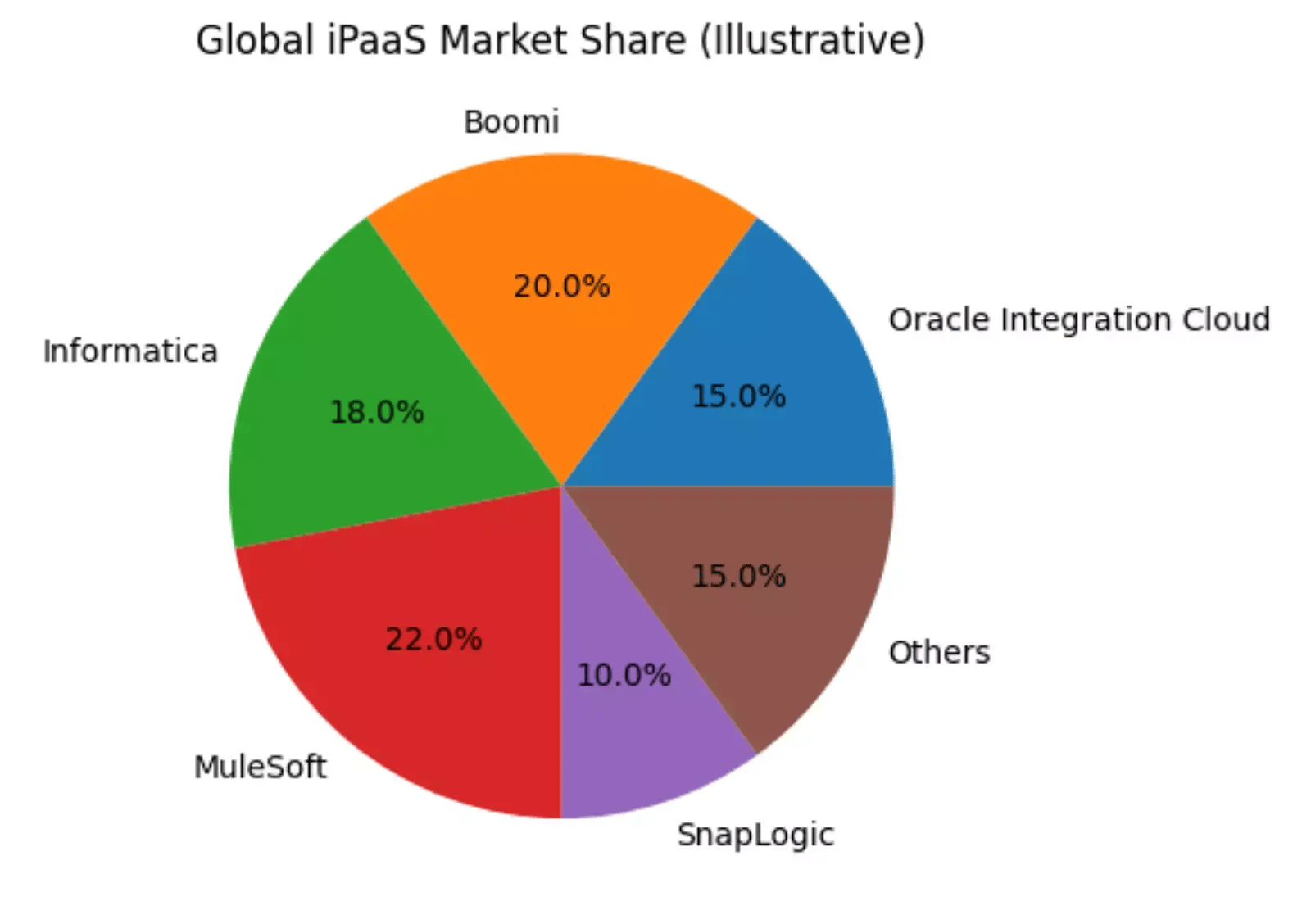
(Note: The graph above is illustrative and represents conceptual data based on general industry trends. Actual market share figures require access to proprietary market research reports.)
Oracle continues to invest heavily in OIC, adding new features, adapters, and capabilities, which contributes to its strong competitive position and growing adoption.
Why Take Oracle Integration Cloud Training?
Investing in OIC training offers numerous benefits for individuals and organizations alike:
- High Demand: As businesses increasingly move to the cloud and require seamless data flow, skilled OIC professionals are in high demand.
- Career Advancement: Mastering OIC opens doors to specialized roles in integration, enterprise architecture, and cloud development, leading to significant career growth.
- Problem Solving: You'll gain the skills to solve complex integration challenges, streamline business processes, and contribute directly to digital transformation initiatives.
- Efficiency and Innovation: Learn how to leverage OIC's capabilities to build efficient integrations and innovative applications, driving business value.
- Future-Proof Skills: Cloud integration is a foundational technology for the future of IT, making OIC skills highly relevant and durable.

Who Can Do Oracle Integration Cloud Training?
OIC training is suitable for a diverse range of professionals looking to enhance their skills or transition into a new area of expertise:
- IT Professionals: Developers, architects, system administrators, and consultants who need to integrate various applications.
- Business Analysts: Those who want to understand how integration impacts business processes and contribute to solution design.
- Cloud Enthusiasts: Individuals interested in building a career in cloud computing, particularly in integration and PaaS.
- Graduates/Freshers: Aspiring IT professionals looking for a high-demand skill set to kickstart their careers.
- Project Managers: To better understand integration complexities and manage projects involving OIC.
Course Outcome
Upon completing comprehensive OIC training, you can expect to:
- Understand the core concepts of cloud integration and Oracle Integration Cloud.
- Be proficient in designing, developing, and deploying integrations using various OIC adapters.
- Learn to monitor and manage integrations effectively within the OIC platform.
- Gain expertise in using OIC Process Automation to design and implement business processes.
- Develop skills in creating web and mobile applications using OIC Visual Builder.
- Be prepared to tackle real-world integration challenges and contribute to enterprise projects.
- Potentially be ready to pursue Oracle's official OIC certifications.
Career Opportunities in Oracle Integration Cloud
The demand for OIC professionals translates into a variety of exciting career paths:
- Oracle Integration Cloud Developer: Responsible for designing, building, and testing integrations.
- Oracle Integration Cloud Consultant: Works with clients to understand their integration needs and implement OIC solutions.
- Integration Architect: Designs the overall integration strategy and architecture for an enterprise, often involving OIC.
- Cloud Engineer/Architect: Specializes in cloud platforms like OIC, ensuring optimal performance and scalability.
- Process Automation Specialist: Focuses on leveraging OIC Process Automation to streamline business workflows.
- Technical Lead/Manager - Integration: Oversees integration teams and projects, providing technical guidance.
Skills Required to Become an Oracle Integration Cloud Professional
To excel as an OIC professional, a blend of technical and soft skills is beneficial:
Technical Skills:
- Core Integration Concepts: Understanding APIs, REST, SOAP, XML, JSON, message queues, and event-driven architectures.
- Cloud Computing Fundamentals: Familiarity with cloud concepts, PaaS, IaaS, and SaaS.
- Oracle Technologies: Knowledge of Oracle databases, middleware (e.g., SOA Suite), and Oracle SaaS applications is a plus.
- Programming Logic: While OIC is low-code, understanding programming logic (e.g., JavaScript for complex transformations) is helpful.
- Data Mapping & Transformation: Proficiency in mapping data between different systems.
- Problem Solving & Debugging: Ability to identify and resolve integration issues.
Soft Skills:
- Analytical Thinking: To understand complex business requirements and design effective solutions.
- Communication: Clearly articulate technical concepts to both technical and non-technical stakeholders.
- Teamwork: Collaborate effectively with development teams, business users, and project managers.
- Attention to Detail: Crucial for accurate data mapping and integration logic.
- Continuous Learning: The cloud landscape evolves rapidly, requiring a commitment to ongoing learning.
Salary Package
Salaries for Oracle Integration Cloud professionals can vary significantly based on experience, location, company size, and specific skill sets. However, generally, OIC skills command competitive compensation due to their specialized nature and high demand.
Here's a conceptual representation of how salary packages might grow with experience for an OIC professional:
Conceptual Salary Ranges for Oracle Integration Cloud Professionals (US, Annual in $)
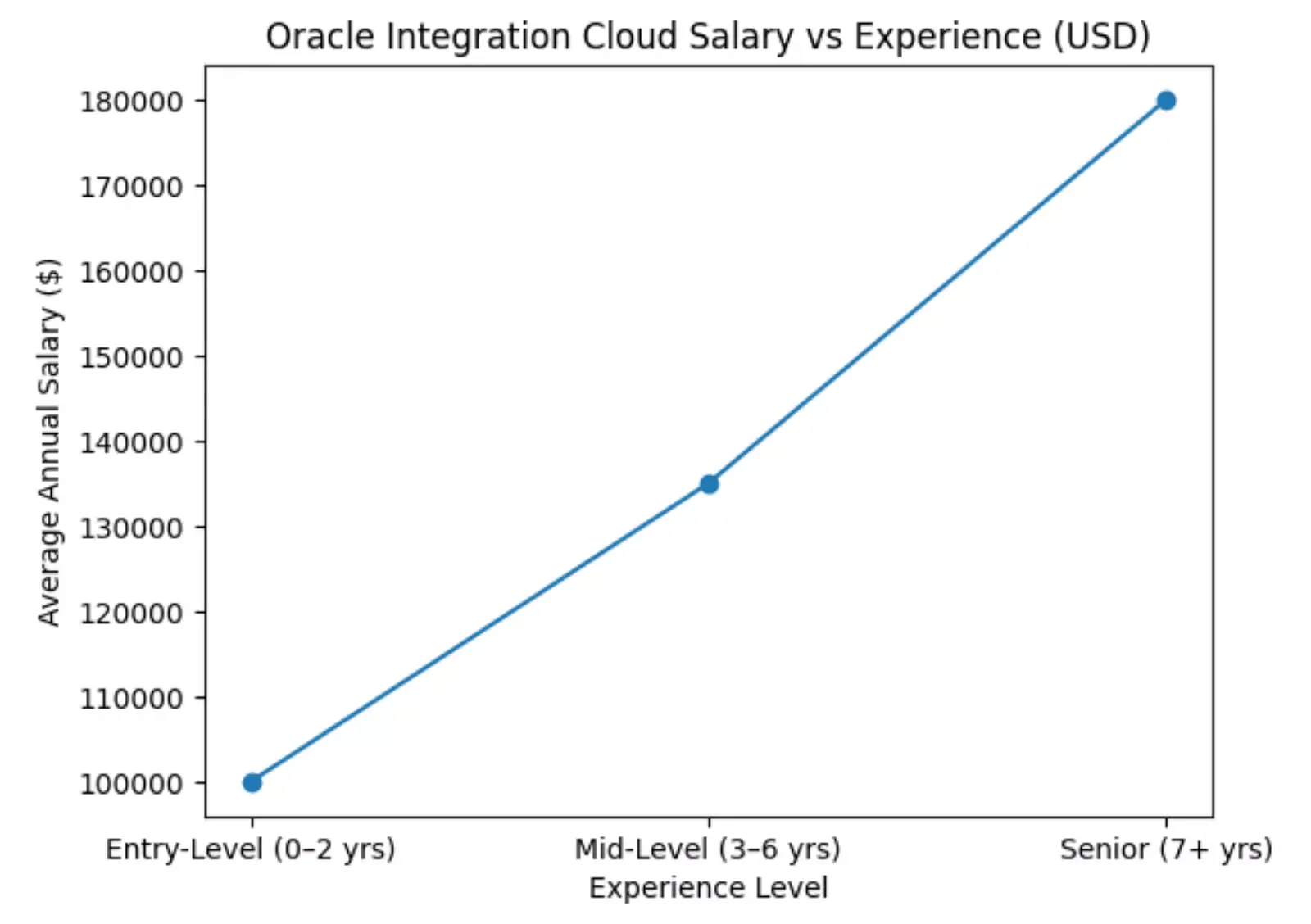 (Note: The graph above is illustrative and represents conceptual salary ranges based on general industry averages for integration specialists. Actual salaries can differ widely. Figures are for general guidance only.)
Entry-level professionals (0-2 years) might start with a solid base, which quickly escalates with 3-6 years of experience, moving into senior and architect roles with 7+ years, where salaries can be substantially higher. Certifications and a strong portfolio of successful integration projects can significantly boost earning potential.
Companies Hiring Oracle Integration Cloud Professionals
Many companies, from small businesses to large enterprises, across various industries, are actively seeking OIC talent. This includes:
- Oracle: Naturally, Oracle itself hires extensively for OIC development, consulting, and support roles.
- System Integrators (SIs) & Consulting Firms: Companies like Accenture, Deloitte, Capgemini, Wipro, TCS, Infosys, and Cognizant frequently work on large-scale integration projects for their clients.
- Enterprise-level Businesses: Any large organization utilizing Oracle ERP (e.g., Oracle E-Business Suite, Oracle Fusion Cloud ERP), CRM (e.g., Oracle CX Cloud), or other Oracle applications will likely need OIC professionals to integrate them with other systems.
- Companies Undergoing Digital Transformation: Businesses modernizing their IT landscape and moving to cloud-based applications are prime candidates for OIC adoption.
- Managed Service Providers (MSPs): Firms that manage IT operations for other companies often require OIC expertise to support their clients' integration needs.
Roles and Responsibilities
While specific roles vary, here are common responsibilities for an Oracle Integration Cloud professional:
- Requirements Gathering: Collaborating with business users and stakeholders to understand integration needs.
- Solution Design: Architecting robust, scalable, and secure integration solutions using OIC.
- Development: Building integrations using OIC's adapters, orchestrations, data mapping, and business rules.
- Testing: Unit testing, integration testing, and supporting user acceptance testing (UAT).
- Deployment: Deploying integrations to various environments (development, test, production).
- Monitoring & Support: Monitoring the performance of integrations, troubleshooting issues, and providing ongoing support.
- Documentation: Creating technical documentation for integrations, design decisions, and operational procedures.
- Performance Tuning: Optimizing integrations for efficiency and performance.
- Process Automation: Designing and implementing business processes using OIC Process.
- Application Development: Using Visual Builder to create or extend applications that interact with integrated systems.
Steps to Prepare for Oracle Integration Cloud Certification
Oracle offers certifications to validate your expertise in OIC. Preparing for these certifications can significantly boost your career prospects.
- Gain Foundational Knowledge: Start with a strong understanding of cloud computing, integration patterns, APIs, and basic Oracle concepts.
- Complete Official Oracle Training: Consider taking Oracle's official OIC training courses, which provide in-depth knowledge and hands-on experience.
- Hands-on Practice: This is crucial. Work on real-world scenarios, build various types of integrations, and experiment with different OIC features. Utilize Oracle's free tier or trial accounts for practice.
- Review Certification Exam Objectives: Download the exam objectives from the Oracle Certification website. This outlines all the topics and areas you need to master.
- Study Oracle Documentation: The official OIC documentation is an invaluable resource for detailed information.
- Utilize Practice Tests: Take practice exams to familiarize yourself with the format and types of questions.
- Join Online Communities: Engage with other OIC professionals in forums, LinkedIn groups, and developer communities to learn from their experiences and ask questions.
- Regularly Update Knowledge: OIC is constantly evolving, so stay updated with the latest features and best practices.
Conclusion
Oracle Integration Cloud is a powerful and essential tool for any organization navigating the complexities of modern IT. For individuals, mastering OIC provides a clear roadmap to a rewarding and in-demand career in cloud integration. By understanding its capabilities, diligently acquiring the necessary skills, and pursuing certification, you can position yourself as a valuable asset in the ever-growing digital economy. The journey into OIC may seem daunting at first, but with a structured approach and consistent effort, you'll be well on your way to becoming a proficient and highly sought-after Oracle Integration Cloud professional.

Getting Started with Oracle Eloqua: A Beginner’s Guide

What Is Java Selenium? Beginner’s Guide to Automation Testing

No Comments Yet
Let us know what you think