
As organizations collect ever larger volumes of data from apps, devices, and users, they need ways to unify, process, and analyze that data quickly and securely. “Data fabric” describes an architectural approach that connects data across silos, locations, and formats—making data discoverable, governed, and usable for analytics and AI. In Microsoft’s portfolio, this capability is delivered through Microsoft Fabric and related Azure services (often referenced together with Azure Data Factory and Azure Synapse). This guide explains what Azure / Microsoft Data Fabric is, why it matters, what training and careers look like, and how to get started.
What is Azure Data Fabric?
“A Data Fabric” is a design pattern and set of capabilities that provide a unified layer to access, integrate, govern, and deliver data across an enterprise. Microsoft’s implementation—Microsoft Fabric—is a unified data analytics platform that bundles ingestion, transformation, storage, governance, and visualization in a single, SaaS-first product. Fabric includes workloads and components familiar from Azure (Data Factory, Synapse, Power BI, OneLake, etc.), but integrated to simplify collaboration, governance, and analytics at scale. In Fabric you’ll find a Data Factory-like experience (Data Factory in Fabric) optimized for the Fabric ecosystem.
Key capabilities
- Unified data lake and lakehouse (OneLake) for centralized storage and governance.
- Data ingestion & ETL: Fabric’s Data Factory-like pipelines and Azure Data Factory for hybrid/advanced scenarios.
- Data engineering and transformation (Spark, Databricks-style tooling integrated).
- Analytics, visualization, and low-code self-service via Power BI integration.
- Governance, lineage, and security integrated across workloads.
Market Share of Azure Data Fabric
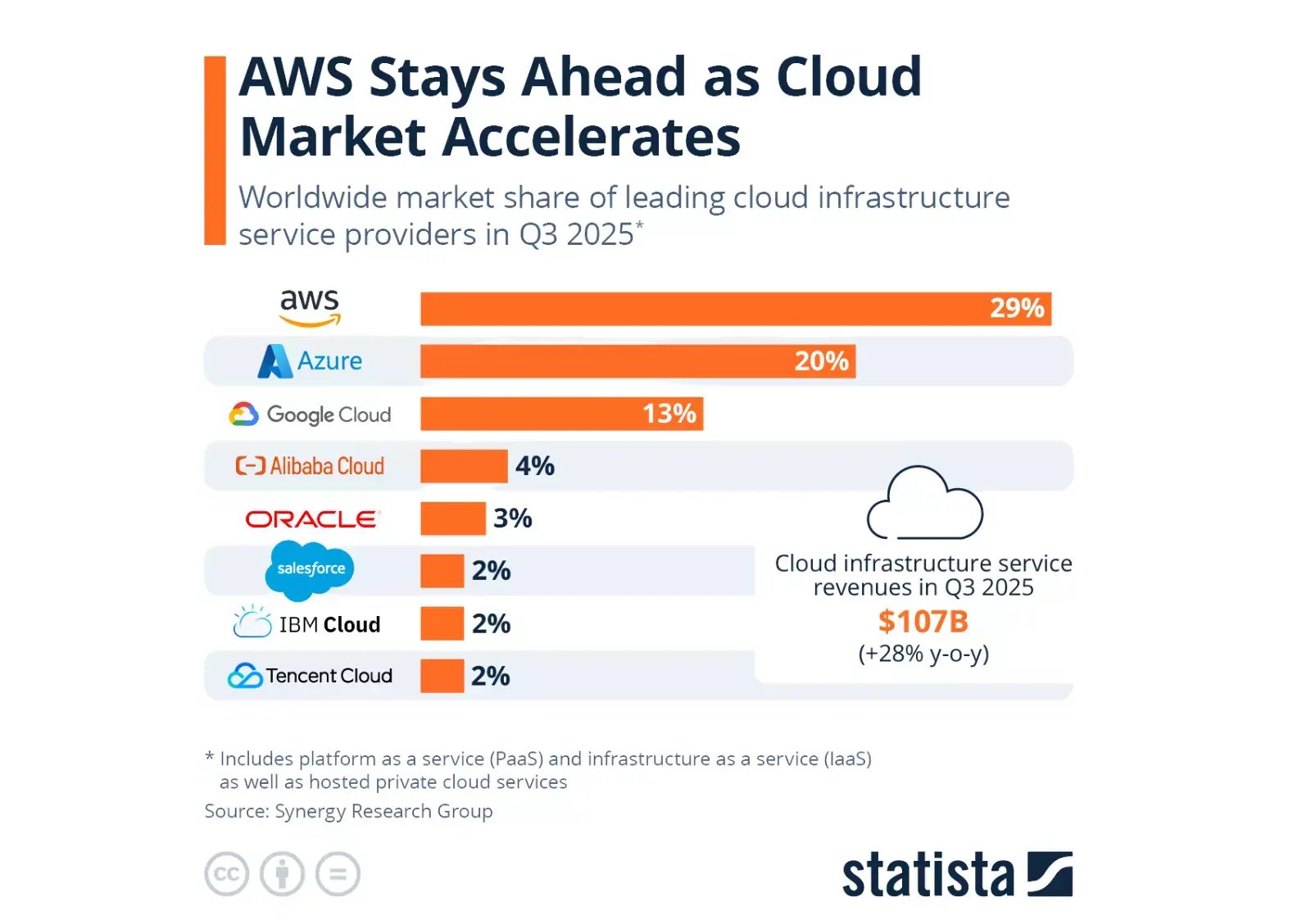
How big is the space? The underlying market driving adoption of Data Fabric capabilities is the cloud and data-integration market. Cloud infrastructure remains dominated by three hyperscalers: AWS, Microsoft Azure, and Google Cloud. Recent market estimates put AWS ~29%, Azure ~20%, and Google Cloud ~13% of the cloud infrastructure market (remainder goes to other providers). Growth in cloud spending and demand for AI-optimized data platforms is a major tailwind for Microsoft Fabric and similar offerings.
Data-fabric specific market growth: independent market research groups estimate the broader data fabric market was valued in the low billions in 2023 and is projected to expand rapidly (CAGR in the high single-digits to low double-digits through the late 2020s). For example, a forecast report estimated the global data fabric market size at roughly $2.29B in 2023 with strong growth projections. This growth is driven by rising demand for unified data management, analytics, and AI-readiness.
Why Take Azure Data Fabric Training?
- Unified platform skills are in demand. Companies prefer talent who can operate across the data stack — ingestion, lake/lakehouse, transformation, analytics, and governance. Microsoft Fabric skills cover this breadth.
- Familiar ecosystem & enterprise adoption. Many enterprises already use Microsoft licensing and Power BI; Fabric reduces friction by integrating with existing Microsoft investments.
- Accelerates career mobility. Knowing Fabric + Azure data services prepares you for roles like Data Engineer, Analytics Engineer, and Fabric Specialist—roles that are actively hiring.
- Useful for AI initiatives. Fabric is designed to help organizations prepare data for AI workloads, an increasingly strategic capability for modern businesses.

Who Can Do Azure Data Fabric Training?
- Beginners with some programming or SQL background. If you understand SQL and basic Python, you can learn the fundamentals.
- Data analysts and BI professionals who want to expand into data engineering and data platform responsibilities.
- Developers and ETL engineers who work with Azure services and want to consolidate skills on Fabric.
- IT professionals and cloud engineers seeking to broaden their analytics and governance expertise.
- Students and career-switchers aiming for high-growth data roles—training often includes practical labs to help you build hands-on experience.
Course Outcome
After completing an Azure Data Fabric course (or Microsoft Fabric training), learners should be able to:
- Explain the Data Fabric concept and Microsoft Fabric architecture (OneLake, Workloads).
- Build data ingestion pipelines (Fabric Data Factory / Azure Data Factory) and perform ETL/ELT operations.
- Use Spark/Databricks-style notebooks and compute for data engineering tasks.
- Implement data models, lakehouse patterns, and connect to Power BI for reporting.
- Implement basic data governance: lineage, access controls, and workspace collaboration.
- Prepare for certification paths or internal assessments validating Fabric/Azure data skills.
Career Opportunities for Azure Data Fabric
Training opens doors to roles such as:
- Azure / Microsoft Fabric Data Engineer
- Data Engineer (Azure-focused)
- Analytics Engineer / BI Engineer
- Data Platform Engineer
- Cloud Data Architect
- Machine Learning Engineer (data preparation focus)
Hiring demand is strong across consultancies, tech product companies, and large enterprise IT teams—platform integrators such as Accenture, Capgemini, Cognizant, Infosys, and product companies including Microsoft regularly list openings for Azure/Microsoft-Fabric related roles. Job boards (LinkedIn, Indeed) show thousands of Azure Data Engineer and Microsoft Fabric roles globally.
Salary Package — Experience vs Package (USD) — with Graph
Compensation for Azure / Data Engineer roles varies by geography, company, and experience. Aggregate figures from public salary sites indicate these representative averages (USD, total base pay estimates):
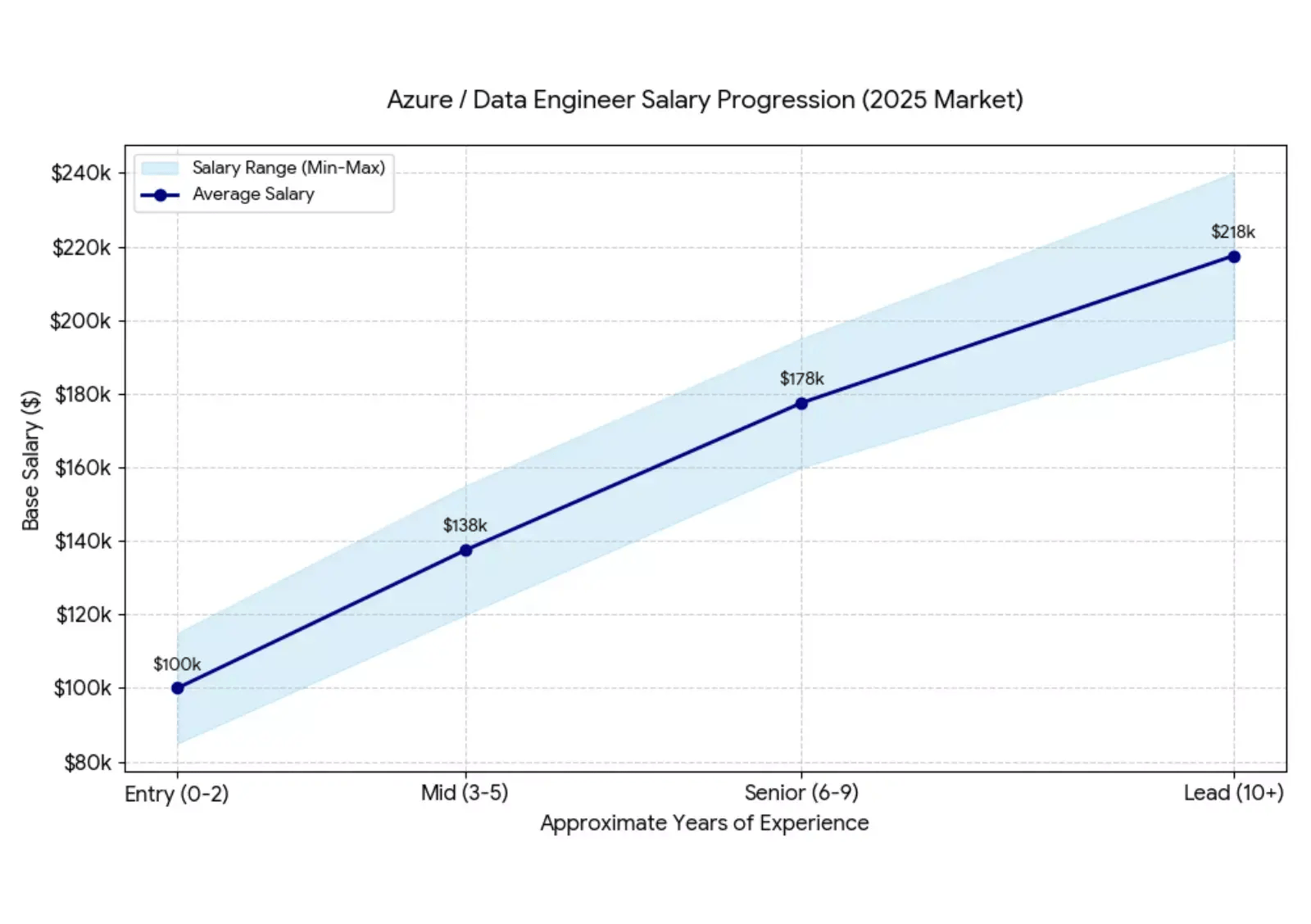
These figures are illustrative averages grounded in Glassdoor / industry reports where median/specific-role data shows Data Engineer averages in the $120k–$160k range and Azure-focused roles often command higher premiums in enterprise contexts. Use these numbers as guidance—actual offers vary by city, company, and negotiation.
Companies Hiring Azure Data Fabric Professionals
Many global and regional players are actively hiring for Azure/Microsoft Fabric skills. Common recruiters include:
- Big consultancies & services: Accenture, Capgemini, Cognizant, HCLTech, TCS, Infosys. Accenture
- Product & tech companies: Microsoft, Nike, Netflix, Meta, and others that run cloud data platforms. (Hiring patterns vary by region).
- Mid-size analytics firms & startups offering analytics, AI, and cloud migration services. (Job boards like LinkedIn and Indeed list hundreds to thousands of Fabric/Azure data positions.)
Roles and Responsibilities
Typical responsibilities for Azure / Microsoft Fabric Data Engineers and related roles:
- Design and develop data ingestion and ETL/ELT pipelines (Fabric Data Factory / ADF).
- Build and maintain lakehouse, data models, and data marts in OneLake / Synapse.
- Implement data transformations using Spark, Python/PySpark, and SQL. HCLTech
- Ensure data quality, governance, and lineage across workspaces.
- Collaborate with analysts and ML teams to make data accessible and production-ready.
Steps to Prepare for Azure Data Fabric Certification
- Understand fundamentals: Learn cloud basics, SQL, and data warehousing concepts.
- Get hands-on with Azure/Azure Fabric: Use Microsoft Learn, free tier trials, and hands-on labs for Fabric workloads. Microsoft docs and guided learning paths are particularly useful.
- Practice pipelines & notebooks: Build sample ETL pipelines (Fabric Data Factory / Azure Data Factory) and Spark notebooks.
- Learn governance concepts: Work with OneLake, workspace permissions, and lineage tools inside Fabric.
- Take an instructor-led course or bootcamp: Structured training helps accelerate practical skills.
- Mock tests & projects: Build a portfolio project (end-to-end data pipeline to Power BI dashboard) and take practice exams aligned to Azure Data Engineer or Fabric-focused assessments.
- Apply for internships / junior roles: Real-world experience is the fastest way to solidify your skills.
Conclusion
Azure Data Fabric (Microsoft Fabric) represents a strategic convergence of ingestion, storage, transformation, governance, and analytics in a unified environment. For learners and professionals, Fabric skills unlock roles across data engineering, analytics, and AI-prep work. With strong enterprise adoption and a growing market for data-fabric capabilities, structured training and hands-on projects can quickly translate into high-demand, well-paid roles. If you’re beginning, start with SQL and Azure basics, do hands-on labs in Fabric/ADF, and build a simple end-to-end pipeline + dashboard to showcase in interviews.

What Is Azure Databricks? Beginner’s Guide & How to Get Started

What Is Fortinet Firewall? Beginner’s Guide to Firewall Basics

No Comments Yet
Let us know what you think